Home › Commercial Concrete Slabs and Flatwork
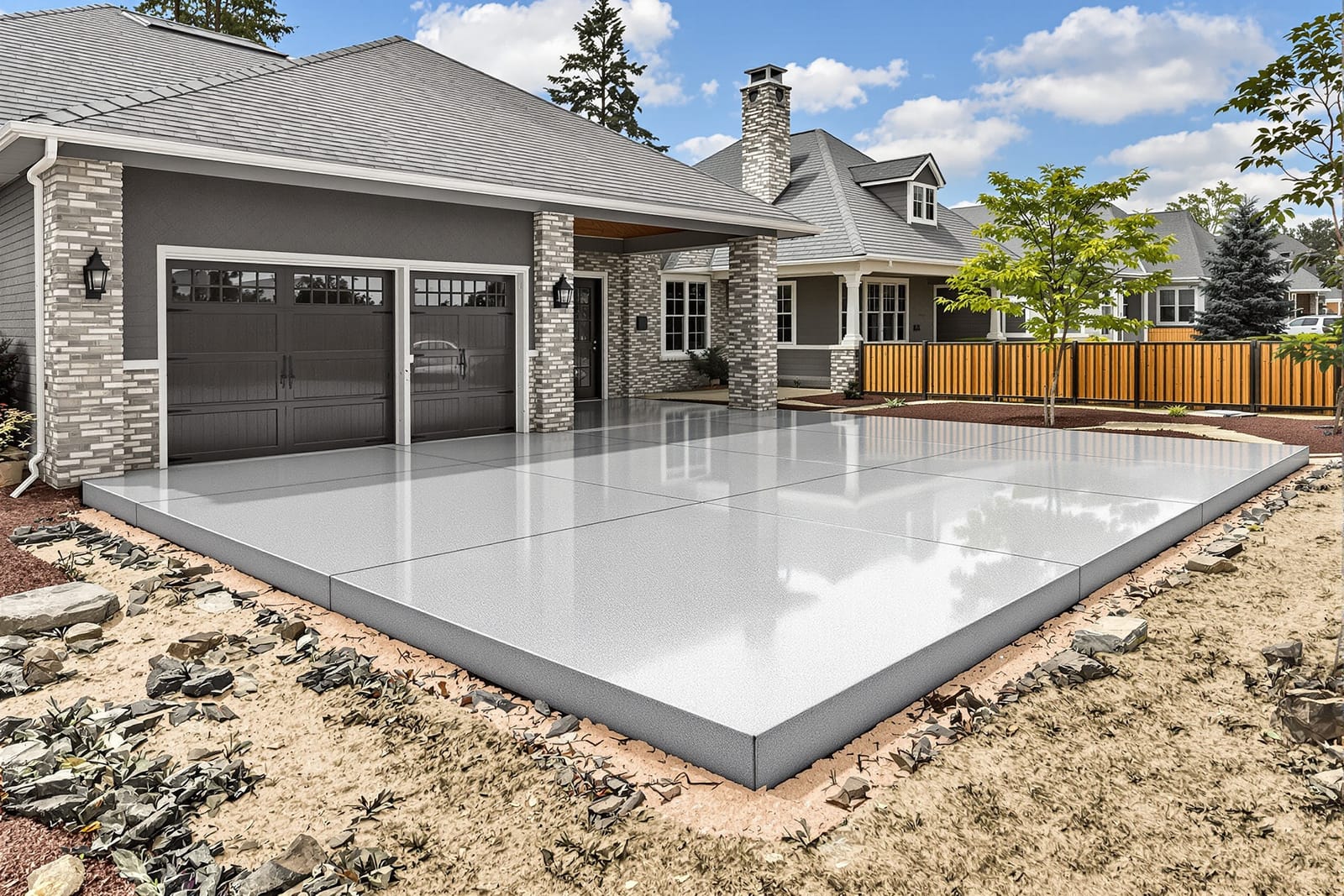
We pour commercial concrete slabs and flatwork in San Antonio, TX for warehouses, manufacturing facilities, loading areas, and exterior plazas. Our crews handle large scale pours, joint layouts, and finishing techniques suited to heavy traffic. You receive flat, durable surfaces that stand up to forklifts, trucks, and pedestrians.
Premier Concrete San Antonio provides professional commercial concrete slab throughout San Antonio, TX, Texas and the surrounding area. Our licensed, insured crew delivers safe, clean, on-time work with a free estimate before anything begins. Call (210) 794-7500 or request your free quote.
Commercial Concrete Slabs and Flatwork for San Antonio Businesses
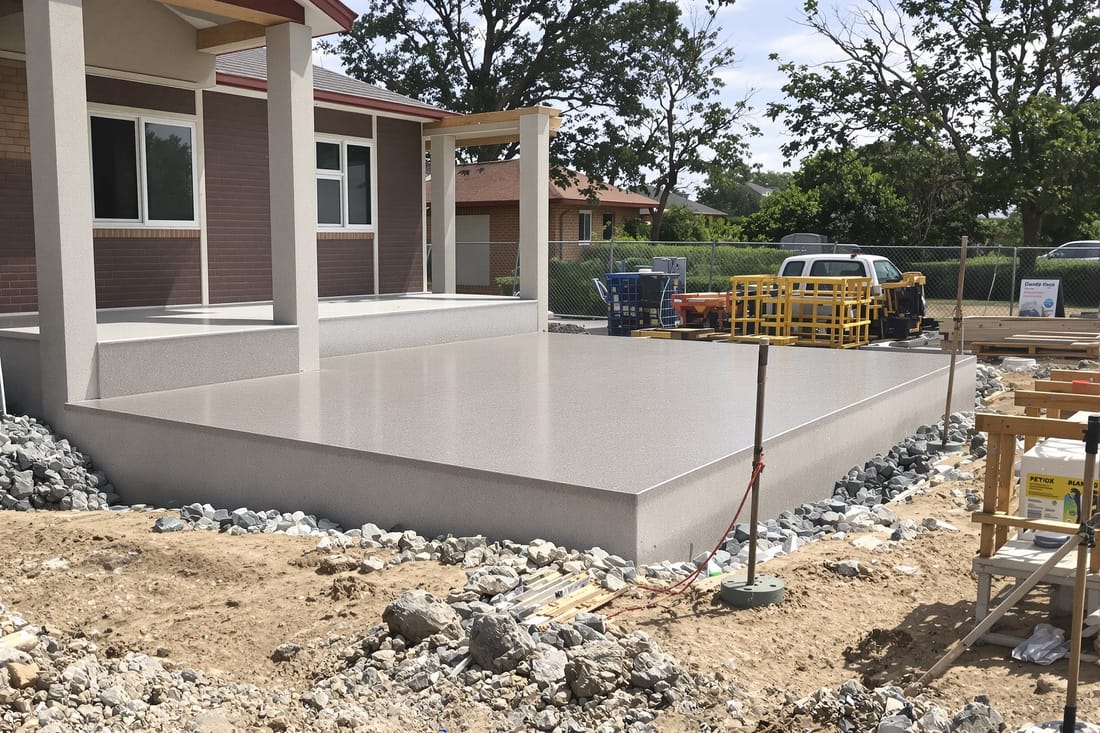
Commercial concrete slabs are the foundation of almost every commercial property in San Antonio, from small retail shells along Bandera Road to large warehouses out near Loop 1604. At Premier Concrete San Antonio, we focus on slabs and flatwork that can handle real-world traffic, equipment loads, and South Texas weather, not just look good on opening day.
We regularly install and repair commercial concrete slabs for warehouses, tilt-wall buildings, offices, restaurants, auto shops, storage facilities, and multi-tenant retail centers. Each project starts with how the slab will actually be used: forklift aisles, pallet rack loads, kitchen equipment, vehicle lifts, or heavy foot traffic. That use drives the slab thickness, reinforcement, joint layout, and surface finish.
Because we work only in the San Antonio area, we are familiar with local soil conditions, city inspection requirements, and the way our caliche and expansive clays behave over time. Our goal is to build a slab that passes inspection the first time, performs under load, and does not surprise you with cracking or settlement a year after you move in.
Site Evaluation, Soil Conditions, and Pre-Construction Planning
Good commercial concrete starts with the dirt under it. Before a single yard of concrete is ordered, Premier Concrete San Antonio evaluates site conditions. On new construction, we review your geotechnical report if available and coordinate with your engineer to confirm subgrade requirements. On smaller tenant improvements or additions, we perform test digs to see what type of fill, caliche, or clay we are dealing with.
For many San Antonio sites, especially on the North Side and in fast-growth areas, we encounter expansive clays that need moisture conditioning and proper compaction to prevent differential movement. We often recommend over-excavating soft or poorly compacted material, then replacing it with engineered fill or a select base, compacted in lifts and tested with a density gauge. For warehouse slabs or automotive bays, we usually install a compacted crushed limestone base to provide better load distribution.
We also plan for drainage early. Even interior commercial slabs can be affected by poor exterior grading that allows water to pond at slab edges. For loading docks and exterior flatwork, we design slopes that move water toward drains or paving, not toward your building. Catch basins, trench drains, and curb cuts are laid out before forming so they integrate cleanly with the concrete work.
During this planning stage, we coordinate with the City of San Antonio Development Services and any applicable county or utility providers to confirm permit status, inspection requirements, and scheduling. For projects inside business parks or managed properties, we also review any design standards or appearance guidelines that affect concrete color, scoring patterns, or exposed edges.
Forming, Reinforcement, and How We Build a Reliable Commercial Slab
Once the site is prepared, we move into forming and reinforcement, which is where the long term performance of your commercial concrete slab is really set. Premier Concrete San Antonio uses layout equipment, including laser levels and string lines, to make sure forms are square, level, and at the correct elevation relative to doors, existing slabs, and surrounding paving.
Formwork is typically built from wood or steel forms staked solidly so they will not move during the pour. We pay close attention to slab edges at overhead doors, ramps, and openings where forklifts or vehicles will cross, because these areas see concentrated stress. For exterior flatwork, such as dumpster pads and drive lanes, we anchor forms to resist the lateral force of the concrete.
Reinforcement is chosen based on the slab design. For many commercial floors and parking areas, this means a combination of rebar grids and welded wire mesh, sometimes with fiber reinforcement added in the mix. Rebar is supported on proper chairs so it stays in the middle of the slab thickness instead of resting on the subgrade, which is a common cause of early cracking. For heavy rack storage or equipment pads, we work closely with engineers to install thicker sections and tighter rebar spacing under those load points.
We also install vapor barriers where required, such as under slabs that will receive flooring or in cold storage areas. For commercial kitchens, food prep areas, or labs, we coordinate plumbing penetrations and floor drain locations with your mechanical and plumbing contractors so that everything lines up and the slab is properly sealed around sleeves and pipes.
Concrete Mixes, Placing, Finishing, and Joints
For commercial concrete slabs in San Antonio, mix design is not one size fits all. Premier Concrete San Antonio works with local ready mix suppliers to specify compressive strength (often 3,500 to 4,000 psi for standard commercial slabs, higher for heavy duty applications), slump for workability, and admixtures that improve performance in our hot climate. We may use set retarders in summer to keep the concrete workable long enough to finish properly and water reducers to maintain strength without adding excess water at the job site.
On pour day, we plan truck sequencing and crew size so that the concrete is placed continuously and consolidated properly. We use vibrators in thicker or heavily reinforced sections to eliminate voids and honeycombing around bars. Laser screeds or straightedges are used to achieve flatness that matches the use of the space, for instance, higher flatness numbers in warehouse aisles where high-bay racking or automated systems are planned.
Finishing options depend on where the slab will be used. Interior warehouse or shop floors often receive a hard trowel finish that is easier to keep clean and may later receive a sealer or epoxy coating. Exterior flatwork, such as sidewalks, dumpster enclosures, and dock areas, usually get a broom finish for slip resistance. For restaurant patios or retail walkways, we can add decorative saw cuts, integral color, or exposed aggregate while still maintaining the structural performance of a commercial slab.
Control and construction joints are critical. We lay out saw-cut joints in a grid that matches the slab thickness and expected movement so that shrinkage cracks occur in the joints instead of across your floor. Where slabs meet building foundations, columns, or existing concrete, we install dowels, keyways, or isolation joints as detailed by the engineer, which helps manage movement without random cracking.
Local Permits, Inspections, and Compliance in San Antonio
Commercial projects in San Antonio typically require permits and inspections, and ignoring this can delay your opening or trigger costly corrections. Premier Concrete San Antonio is familiar with the City of San Antonio Development Services process and coordinates our work with your general contractor, architect, or directly with the city on smaller projects.
Before we pour a commercial concrete slab, the city or third-party inspector may need to review the subgrade, base material, moisture conditioning, reinforcement placement, and forms. We schedule these inspections in advance to keep your project on track. We also track any special inspection requirements for post-tensioned slabs or engineered foundations, where a structural engineer or testing lab must verify tendon placement or rebar layout.
If your project is in an ETJ area or under Bexar County jurisdiction, inspection requirements may differ, and we adjust accordingly. For sites within commercial associations or large retail centers, we pay attention to site standards, such as matching existing sidewalk widths, curb details, and ADA ramp designs.
ADA compliance is particularly important for commercial flatwork. We construct ramps, landings, and accessible routes to meet slope, cross-slope, and surface texture requirements. This includes attention to the exact finished elevation at door thresholds and the placement of detectable warning surfaces where required, which helps you avoid inspection failures and future liability issues.
What Drives Cost and How to Budget for Commercial Concrete Slabs
Many San Antonio owners and facility managers want to know why two slab quotes can be so far apart. The main cost drivers for a commercial concrete slab are slab thickness, reinforcement type and spacing, subgrade preparation, access for equipment, and any special finishes or coatings.
A light duty storage building slab might be 4 to 5 inches thick with standard reinforcement, while a distribution center with heavy forklifts could require 6 to 8 inches or more, with tighter rebar spacing and higher strength concrete. That difference multiplies across a large floor area. Subgrade correction, such as removing poor soils or adding several inches of compacted base, also affects cost but can save you from expensive repairs later if ignored.
Access and phasing matter as well. If concrete trucks can back directly to the pour area, costs are lower. If we must pump concrete over existing structures, through tight alleys, or at night to work around operations, that adds labor and equipment charges. For tenant improvements inside an active building, we often have to pour in smaller sections and protect surrounding areas, which can increase time and cost.
During estimating, Premier Concrete San Antonio walks the site when possible, reviews any available plans and soils reports, and provides a scope that clearly states what is included, such as vapor barriers, saw-cut joints, curing compounds, and haul off. We also discuss options, for instance, increasing base thickness but keeping concrete thickness moderate, or choosing between different finish levels for interior floors. This helps you align the slab design with both your budget and the demands of your operation.
Why Local Experience Matters and How to Get Started
Concrete is permanent, and replacing a failed commercial slab can be disruptive and costly. Choosing a contractor that understands San Antonio conditions, local codes, and commercial usage patterns is one of the most important decisions you will make on a new build or expansion. Premier Concrete San Antonio brings that local experience to every project, whether you are adding a few thousand square feet of warehouse floor or building a new retail shell from the ground up.
We are used to working around live businesses, coordinating pours to minimize downtime, and sequencing flatwork so that deliveries and customer access remain open where possible. For example, we can phase exterior flatwork at shopping centers so that only part of the parking area or sidewalk is closed at any given time, with clear signage and safe access routes.
To get started, we typically schedule a site visit to understand your building use, equipment loads, drainage conditions, and schedule. From there, we can provide pricing based on your engineer's plans or, for smaller projects, help you define a scope that meets general commercial standards while staying practical. We are also available to evaluate existing slabs that show cracking, settlement, or surface wear and advise whether repair, overlay, or replacement is the most cost effective path.
If you need a commercial concrete slab or flatwork solution in San Antonio or the surrounding area, Premier Concrete San Antonio is ready to help you build a durable, code compliant foundation for your operations.