Home › Concrete Slab Installation
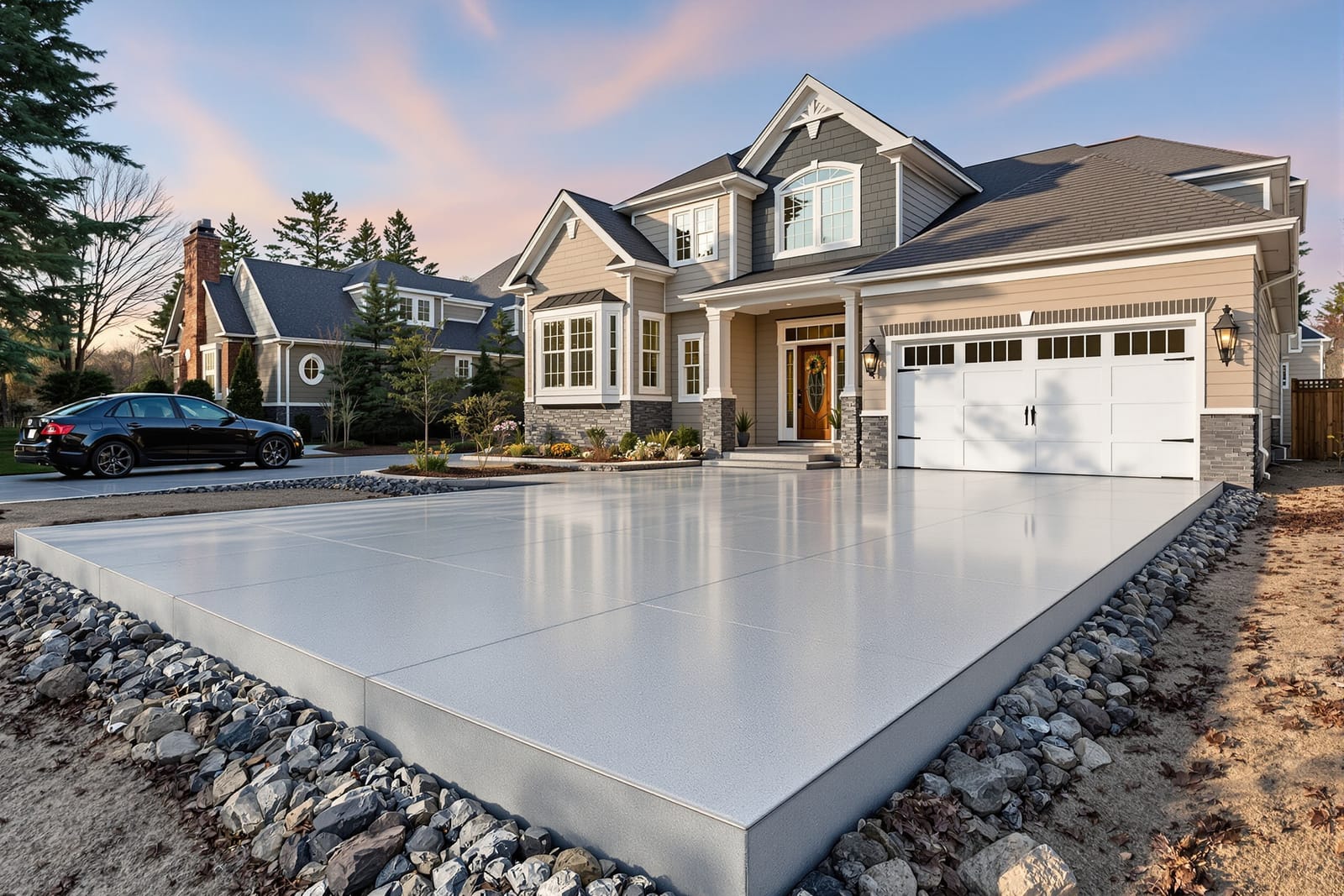
We specialize in concrete slab installation in San Antonio, TX for sheds, garages, home additions, and outdoor spaces. Our team sets accurate forms, compacts the base, and installs reinforcement to meet your load requirements. You get a level, durable concrete floor slab that supports your structure and resists cracking over time.
Premier Concrete San Antonio provides professional concrete slab throughout San Antonio, TX, Texas and the surrounding area. Our licensed, insured crew delivers safe, clean, on-time work with a free estimate before anything begins. Call (210) 794-7500 or request your free quote.
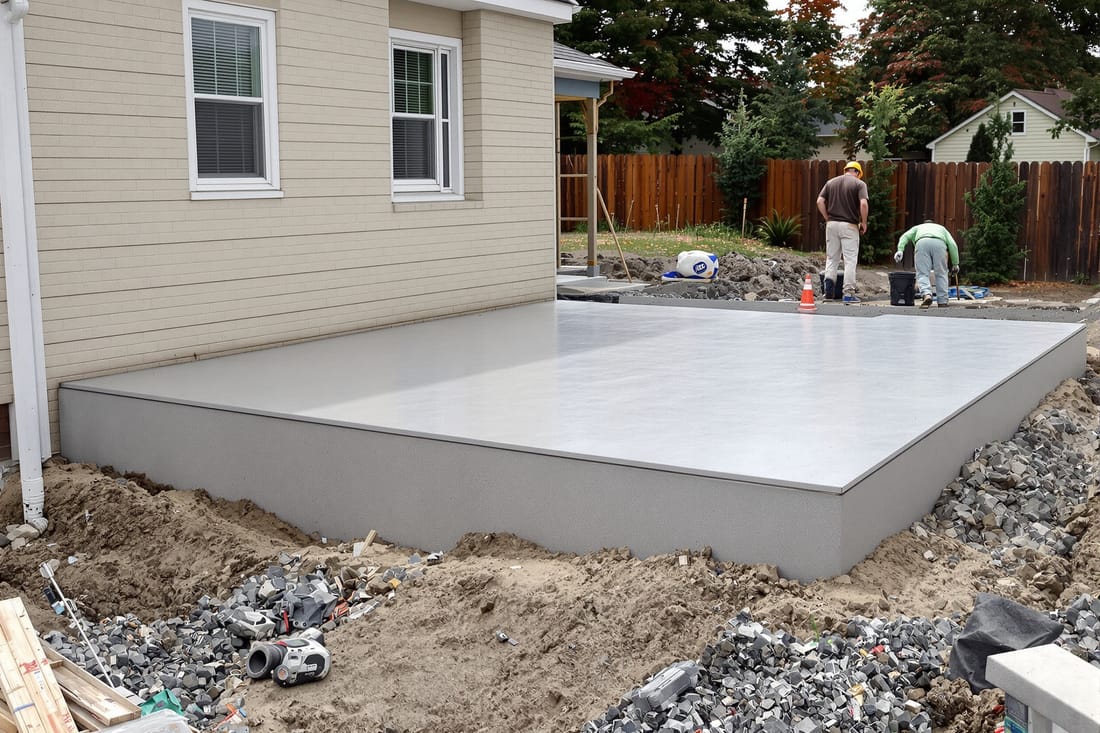
Concrete slab installation in San Antonio that is built for our soil and heat
Concrete slabs in San Antonio work harder than most people realize. Our clay-heavy soils expand when wet and shrink when dry, and the summer sun can bake concrete all day. At Premier Concrete San Antonio, we design every concrete slab to handle those exact conditions, not some generic national standard.
When you call us about a concrete slab project, we start with where the slab is going and what it will support. A small patio off a 1970s ranch home in Alamo Heights needs something different than a heavy equipment pad on the South Side or a garage slab in Stone Oak. We look at access for trucks, drainage around the house, nearby trees, and any existing cracking in your driveway or walkways, since that often tells us how your soil behaves.
Local building requirements matter too. In San Antonio, a typical residential slab is 4 inches thick with rebar or wire mesh reinforcement. For driveways, RV pads, and workshops we often recommend 5 to 6 inches with thicker edges and tighter rebar spacing. We will walk you through these options in plain language, explaining why one mix design or thickness makes sense for your specific property instead of just quoting a one-size-fits-all slab.
How we actually install your concrete slab, step by step
Our crews follow a clear, consistent process so you know what is happening on your property and when. Once you approve your estimate, we schedule around weather, your timeline, and concrete plant availability. Here is how a typical concrete slab installation goes with Premier Concrete San Antonio.
Site prep and layout: We mark out the exact slab footprint with you present, adjust for your preferred shape and size, and confirm elevations so water drains away from your house. Then we remove grass, old concrete, or pavers and excavate to the required depth.
Subgrade and base: San Antonio soils vary a lot, even from one side of a yard to the other. We compact the native soil firmly, then add a layer of road base or crushed limestone where needed, compacting in thin lifts. In areas that stay damp or where we see soft spots, we spend extra time proof rolling and may increase base thickness so the slab does not settle later.
Forms and reinforcement: We build straight, level forms from lumber or steel and secure them so they will not move when the concrete is placed. For light-duty patios we might use welded wire mesh, while for driveways, garages, and sheds we typically install #3 or #4 rebar in a grid pattern, often with extra steel at edges and around load points like columns or vehicle wheels. We chair the reinforcement so it sits in the correct position inside the slab, not on the bottom where it does little good.
Concrete placement and finishing: We order a mix design appropriate for the job, usually 3000 to 4000 psi, with additives for workability or hot weather as needed. We place the concrete quickly, spread it evenly, then screed it to the proper height. Finishing might include a light broom for traction, a trowel finish for interiors, or a decorative texture. Control joints are installed at the right spacing and depth to manage natural cracking.
Curing and cleanup: Proper curing is critical in the San Antonio sun. We often apply curing compound or, for some slabs, keep the surface lightly damp and covered for the first several days. We remove forms, backfill edges, and clean up so your property is usable again while the slab reaches full strength.
Design and material options for your concrete slab
Concrete slabs do not have to be plain gray rectangles. Premier Concrete San Antonio offers several options so your slab both performs well and looks right with your home or business.
Thickness and reinforcement choices: For most backyard patios, 4 inches thick with wire mesh and proper joints works well. For driveways that will see trucks, trailers, or work vans, we often recommend 5 inches with rebar on 18 inch or 24 inch centers. For shop floors, equipment pads, or small commercial applications, 6 inches or thicker with a tighter rebar grid is common. We explain how each upgrade impacts strength and cost so you can choose what makes sense.
Surface finishes: Around older bungalows and midcentury homes, a simple broom finish slab often matches existing walks and driveways. In newer subdivisions, many customers prefer a slightly smoother finish with clean saw-cut joints for a more modern look. If you want something more decorative, we can add color, borders, or exposed aggregate in some applications, as long as it does not compromise traction or durability.
Functional details: Small details make a big difference in how a slab performs. We can slope a patio slightly away from the house to prevent water from backing up against your foundation, add a thickened edge where a future pergola or patio cover might be installed, or integrate a small step or ramp if your back door sits higher than the yard. For garage and shop slabs, we can discuss saw cuts for tool or storage layouts and floor drain locations when plumbing allows.
Existing structures: Many San Antonio properties already have aging concrete. We can tie a new slab into an older one with dowel bars where appropriate, or leave a small separation joint when the old slab has visible movement or cracking, so problems do not transfer into your new concrete.
What affects cost and how to avoid expensive surprises
Concrete slab pricing is not just square footage multiplied by a number. Premier Concrete San Antonio breaks down your estimate so you can see what drives the cost and where you might have options.
Access and demolition: Backyards with tight side yards, trees, or air conditioner units may require smaller equipment or more handwork, which adds time. Removing old concrete or thick tree roots also adds cost. When we visit your site, we point these issues out in advance so they do not show up as surprise charges.
Soil conditions and base: If we encounter very soft or saturated soil, heavy clay pockets, or fill dirt that was not compacted when the house was built, we may recommend additional base material, more compaction, or a thicker slab. Spending a bit more at this stage usually prevents larger repair costs later, such as settled corners, trip hazards, or cracked garage floors.
Thickness, rebar, and mix design: Upgrading from a 4 inch to a 5 inch slab, or from wire mesh to rebar, uses more concrete and steel. Choosing a higher strength mix or additives that help with early strength or hot weather placement will also affect price. We give you at least one “good” and one “better” option, with clear line items, so you can balance initial cost with long term performance.
Finish and details: Simple broom finishes are the most economical. Decorative options like color, borders, or more complex saw-cut patterns involve more labor. Extras such as thickened edges, steps, or integrated footings for future structures add concrete and steel but can save you from rework later.
Permits and inspections: Some slabs, especially for additions or garages, must meet city or county requirements. We can coordinate required permits and inspections in San Antonio and will outline those fees and timelines before work starts.
Common slab problems in San Antonio and how we prevent them
Older concrete slabs across San Antonio show the same recurring issues: random cracking, lifted corners, and settlement that causes water to run toward the house instead of away from it. At Premier Concrete San Antonio, we take those local lessons and build them into how we install every new slab.
Cracking: Concrete almost always cracks somewhere, but the goal is to control where and how much. We place control joints at the right spacing for the slab thickness, typically creating squares or rectangles that are not overly long and narrow. We cut these joints at the right time, often the same day or early the next morning, before the slab creates its own uncontrolled crack. Proper reinforcement and a good subbase help keep any cracks that do form tight and mostly cosmetic.
Movement and settlement: Our expansive clays swell when wet and shrink in drought. To reduce movement, we compact the subgrade in thin layers, add crushed base where needed, and avoid leaving organic material like roots or topsoil under the slab. At edges where settlement is more likely, such as near old fence lines or filled areas, we may thicken the slab or add more steel. For slabs near existing foundations, we pay careful attention to drainage so water does not collect where it can soften the soil.
Hot weather issues: Pouring concrete in August is different from pouring in March. High temperatures and wind can cause the surface to dry too fast, which can lead to surface cracking or weak top layers. We schedule pours earlier in the morning when possible, use appropriate admixtures for workability and set time, and apply curing methods that protect the surface from rapid moisture loss.
What you can do as the owner: After the slab is placed, your role is mainly to respect cure times and keep heavy loads off the slab until we say it is ready. For most residential slabs, light foot traffic is usually fine after 24 hours, but vehicles should wait at least 7 days, and heavy trucks longer. We will give you clear, written guidelines before we leave, so your new slab has the best chance to perform for many years.