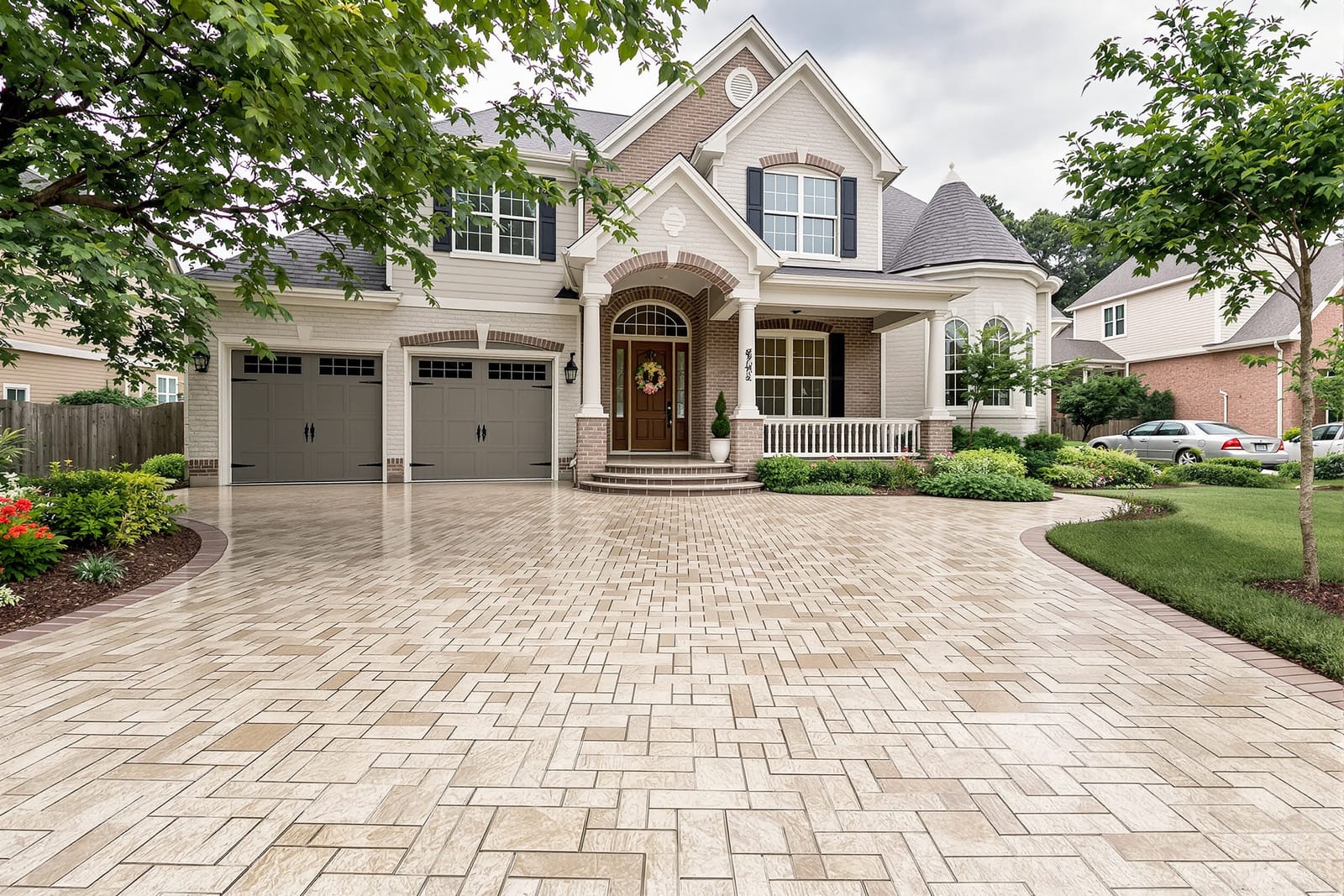
Our stamped concrete services in San Antonio, TX give you the look of stone, brick, or pavers with the strength of reinforced concrete. We offer a wide range of stamp patterns, textures, and colors to customize patios, walkways, and pool decks. Each decorative concrete project is carefully poured, stamped, and sealed for long lasting beauty and easier maintenance.
Premier Concrete San Antonio provides professional stamped concrete throughout San Antonio, TX, Texas and the surrounding area. Our licensed, insured crew delivers safe, clean, on-time work with a free estimate before anything begins. Call (210) 794-7500 or request your free quote.
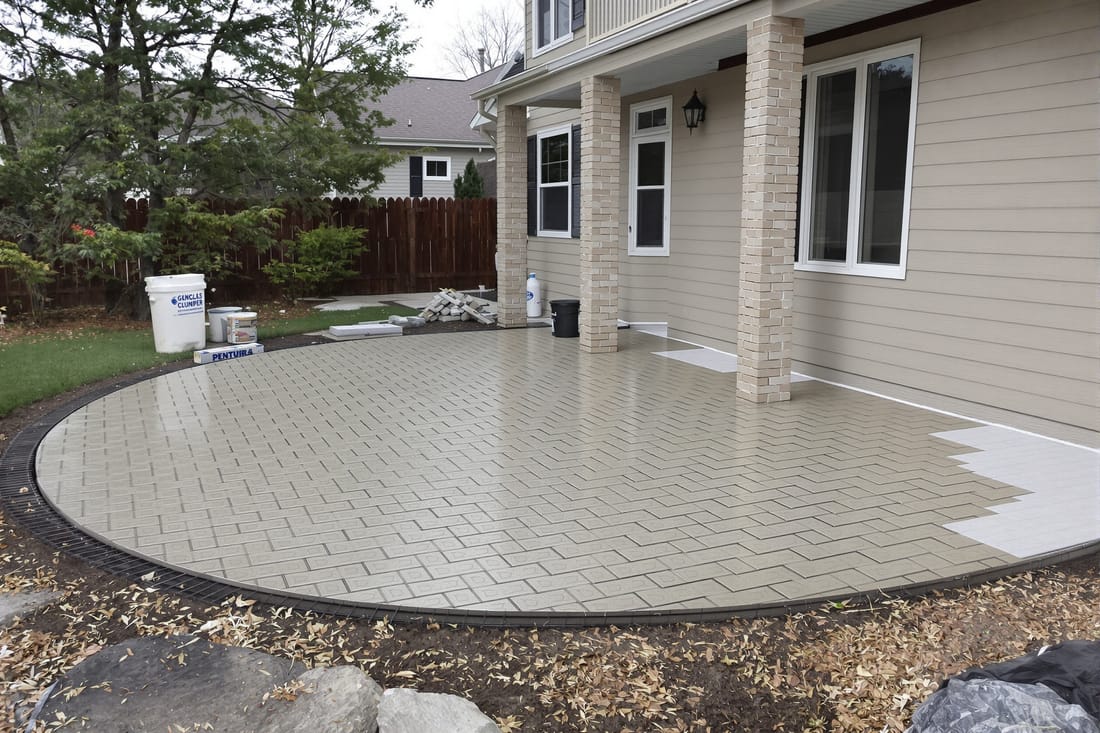
Stamped Concrete Services in San Antonio, Built for Real Use
Stamped concrete is a way to get the look of stone, brick, or pavers without the constant shifting and weed growth that comes with individual pieces. At Premier Concrete San Antonio, we install stamped slabs that are actually designed for the heat, clay soils, and sudden storms we see in this area. We focus on stable base prep, proper steel reinforcement, and finishing methods that stand up to our weather instead of just looking good on day one.
For San Antonio homeowners, stamped concrete is commonly used for patios, pool decks, walkways, and driveways. The process is not just pressing a pattern into wet concrete. We plan the slab thickness, joint layout, and drainage before we ever pour. That way, the pattern does not get cut up awkwardly by control joints, and water does not sit in low spots and stain the surface. Premier Concrete San Antonio handles all of that layout in advance so the finished surface looks intentional, not pieced together.
Unlike pavers, stamped concrete is one continuous surface, which makes it harder for ants and grass to take over joints and for chairs to wobble on uneven edges. In our climate, that also means less movement from wet and dry cycles in the soil compared with individual stones. When you call us, we walk your property, look at sun exposure, roof drainage, and soil conditions, and then recommend a stamped concrete design that will actually work with your yard instead of fighting it.
How We Install Stamped Concrete Step by Step
A durable stamped concrete job in San Antonio starts with dirt work. We strip grass and organics, then compact the subgrade using plate compactors or small rollers so the slab is not sitting on soft topsoil. In most residential projects we place 3 to 4 inches of compacted base material over the native soil, especially in areas that stay damp after rain. This base helps with drainage and keeps the concrete from settling in pockets.
Next, we set forms with a slight slope, typically around 1/8 to 1/4 inch per foot, to direct water away from your home and toward a yard area or drain. Then we install reinforcement. For patios and walkways we often use #3 or #4 rebar on a grid, supported on chairs so the steel ends up in the middle of the slab, not at the bottom. For driveways and RV pads we may tighten the spacing or increase bar size. Some jobs use welded wire mesh plus rebar around edges or at stress points.
We then place the concrete, usually a 3,000 to 4,000 psi mix that is appropriate for exterior use. In summer, we plan pours early in the day to avoid flash setting in high heat. We strike off and bull float the surface to level it without overworking it, which helps avoid bringing up too much cream or water that can later flake. Once the surface has started to firm, we apply color hardener or integral color, depending on what you chose.
When the concrete reaches the right firmness, we broadcast a release agent that keeps the stamps from sticking and provides secondary color in the low spots. Then we place the stamp mats in sequence, working across the slab to keep pattern lines straight and consistent. Our crew uses hand tools to press the pattern into edges, steps, and tight spots that the big mats cannot reach. After stamping, we cut control joints where needed to manage cracking, then let the slab cure before washing and sealing.
Stamped Concrete Designs and Color Choices for San Antonio Homes
Stamped concrete can mimic many materials, but not every pattern looks right next to a South Texas home. At Premier Concrete San Antonio we focus on patterns and colors that match local architecture and our strong sunlight. Popular choices include ashlar slate for clean, modern patios, random stone patterns for more natural spaces around pools, and cobblestone or brick borders to frame driveways and front walkways.
For color, you can choose integral color mixed through the concrete, a dry shake color hardener that strengthens the surface, or a combination of both. Integral color is good for large slabs where small scratches will not show a different color underneath. Color hardener creates richer tones and increases surface density, which helps with abrasion resistance on high traffic areas. Release powders or liquids add secondary color in the deeper parts of the pattern, which is what really makes the stone texture stand out.
In San Antonio, the strong sun can make very dark colors uncomfortably hot, especially around pools. We usually suggest medium to lighter tones, such as sandstone, buff, or light gray, for decks where bare feet are common. For driveways, earth tones and charcoal accents hide tire marks better than plain gray. We also design borders and contrasting bands that help break up large areas of concrete visually, which can make a typical backyard patio look more like a custom outdoor room.
We can integrate steps, seat walls, or matching broom-finished walkways into the stamped concrete layout so everything looks like a single design instead of separate add-ons. During your estimate, we bring sample boards and photos from completed projects in the San Antonio area so you can see how certain combinations have held up over time, not just how they look in a brochure.
Cost Factors and Typical Pricing for Stamped Concrete Projects
Stamped concrete costs more than a basic broom-finished slab because it involves more labor, materials, and detailing. When Premier Concrete San Antonio prices a project, we look at several main factors: total square footage, pattern complexity, number of colors, site access, and the amount of prep work required.
On most residential projects we work with 4 inch slabs for patios and walkways and 5 inch or thicker for driveways or heavy vehicle areas. Extra thickness and more reinforcement increase cost but are often worth it in our expanding and contracting clay soils. Patterns that require intricate hand tooling, like detailed borders or multiple stamp sets, also add labor time. Simple slate or stone patterns usually install faster than highly irregular or wood plank styles that demand more alignment work.
Colors affect pricing too. A single integral color with a basic release shade will be less expensive than a system that uses integral color, color hardener, antiquing wash, and a contrasting border. In some backyards we also need to remove old concrete or adjust grades to correct drainage before we pour, and that excavation and haul off is a separate cost.
Access is another practical issue. If we can get a concrete truck close to the work area, costs stay lower. If the yard only allows wheelbarrow access, or we have to pump the concrete over a fence or around a pool, labor and equipment costs increase. During your on-site visit we explain each of these factors so you know what is driving your quote instead of seeing just a single per-square-foot number with no explanation.
Weather, Timing, and Long-Term Durability in the San Antonio Climate
San Antonio weather has direct impact on how stamped concrete should be scheduled and installed. High heat, strong sun, and sudden storms can ruin a project if they are not accounted for. At Premier Concrete San Antonio, we watch the forecast closely and will not pour if heavy rain is likely during finishing or early curing. Rain on fresh stamp work can wash out color and blur pattern details.
In summer, concrete can set very quickly. We adjust by starting pours early, sometimes at sunrise, and by using set-control admixtures when needed. This gives us enough open time to properly place color, apply release, and stamp without rushing. We also keep wind and shade in mind, since shaded sections of a slab cure more slowly than areas in full sun. We plan our stamp sequence to avoid having one section too soft while another is already too hard to take a good impression.
For cold snaps, which are less frequent but do occur, we avoid pouring on freezing nights and protect fresh concrete from rapid temperature swings. This helps prevent surface scaling and weak spots. After placement, we promote proper curing with either curing compounds compatible with the future sealer or by moist curing in cooler months. Good curing practices are one of the reasons stamped surfaces resist early cracking and surface dusting.
Long term, stamped concrete in San Antonio benefits from resealing every 2 to 4 years depending on sun exposure and traffic. South facing driveways may need it more often than shaded patios. We use sealers designed for hot climates, and for pool decks we typically suggest lower gloss, higher traction sealers instead of shiny, slick coatings. We also recommend simple maintenance: sweeping off grit that can scratch the surface, rinsing off leaf stains fairly quickly, and keeping sprinklers from constantly soaking just one edge of the slab.
Common Issues, Maintenance, and How We Stand Behind Our Work
Stamped concrete, like any concrete, can crack and wear if it is not installed correctly or maintained. Our approach at Premier Concrete San Antonio is to reduce those risks from the beginning and to be clear about what is normal over the life of the slab. We design control joint layouts that work with the stamp pattern whenever possible so that expected hairline cracks open inside those joints instead of randomly across the design. On complex patterns we may use saw cuts after the initial cure so we can place joints exactly where they will be least noticeable.
Sealer performance is another common concern. In our climate, cheaper sealers can peel, turn cloudy, or become slippery. We use commercial-grade products, apply them in thin coats, and follow manufacturer recommendations for recoat times. For existing stamped concrete that has been sealed heavily in the past and is now peeling, we can strip failing layers, allow the slab to dry thoroughly, and then reseal with the right system. We also add non-slip additives where needed, especially on slopes or near water.
Maintenance for homeowners is fairly simple: gentle cleaning, watching for sealer wear, and avoiding harsh de-icing salts (rarely needed in San Antonio) or strong solvents. For oil or grease stains, we can recommend specific cleaners that will not strip color. If your stamped concrete is several years old and fading, we can often refresh it by cleaning, applying a colored antiquing wash, and resealing, instead of tearing it out.
Before any project, we go over what is covered by our workmanship warranty and what is considered normal behavior for concrete. That way you know up front what to expect and how to keep your stamped patio, driveway, or pool deck looking good for as long as possible. Our goal is to install stamped concrete that fits your property, your budget, and the real conditions we face in San Antonio, not just a surface that looks good on day one.